Author archives

Market Efficiency Hypothesis

The market efficiency hypothesis, also known as the Efficient Market Hypothesis (EMH), is a theory in financial economics that suggests that asset prices fully reflect all available information at any given time. The implications of this hypothesis are profound, as it implies that it is impossible to consistently achieve higher returns than the overall market …
Derivative

The term derivative refers to a type of financial contract whose value/structure is derived from some other asset. It is dependent on an underlying asset, group of assets, or benchmark. A derivative is set between two or more parties that can trade on an exchange or over-the-counter (OTC). CASH Price/ SPOT Priece The price of underlying asset is …

Google Cloud Data Engineering

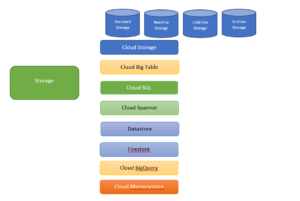
GCP is broadly divided into the following categories Networking Compute Storage Bigdata and ML Products Compute The GCP offers the following compute services. Compute Engine Kubernetes Engine App Engine Cloud Functions Anthos Cloud Run Compute Engine is Google’s infrastructure-as-a-service (IaaS) offering. It is also the building block for other services that run on top of this compute resource. …

Java and Spark Memory Management

Memory usage in Spark largely falls under one of two categories: execution and storage. As spark jobs are run inside JVM, so it’s important to understand JVM memory management first. Java Memory Management In Java architecture there are three basic components: 1-Java Development Kit– JDK is a software development environment used for java applications. It …

Apache Spark- Performance Tuning

Apache Spark is a compute engine and it’s very important to use this engine in efficient ways. Before moving forward let us discuss few basic terms used in performance. Spark performance can be improved at the job level and another at the spark-SQL level. Spark job optimizations We can optimize the spark jobs by following …